Concept Case Study · Fintech · Product Strategy · AI · Behavioral Design
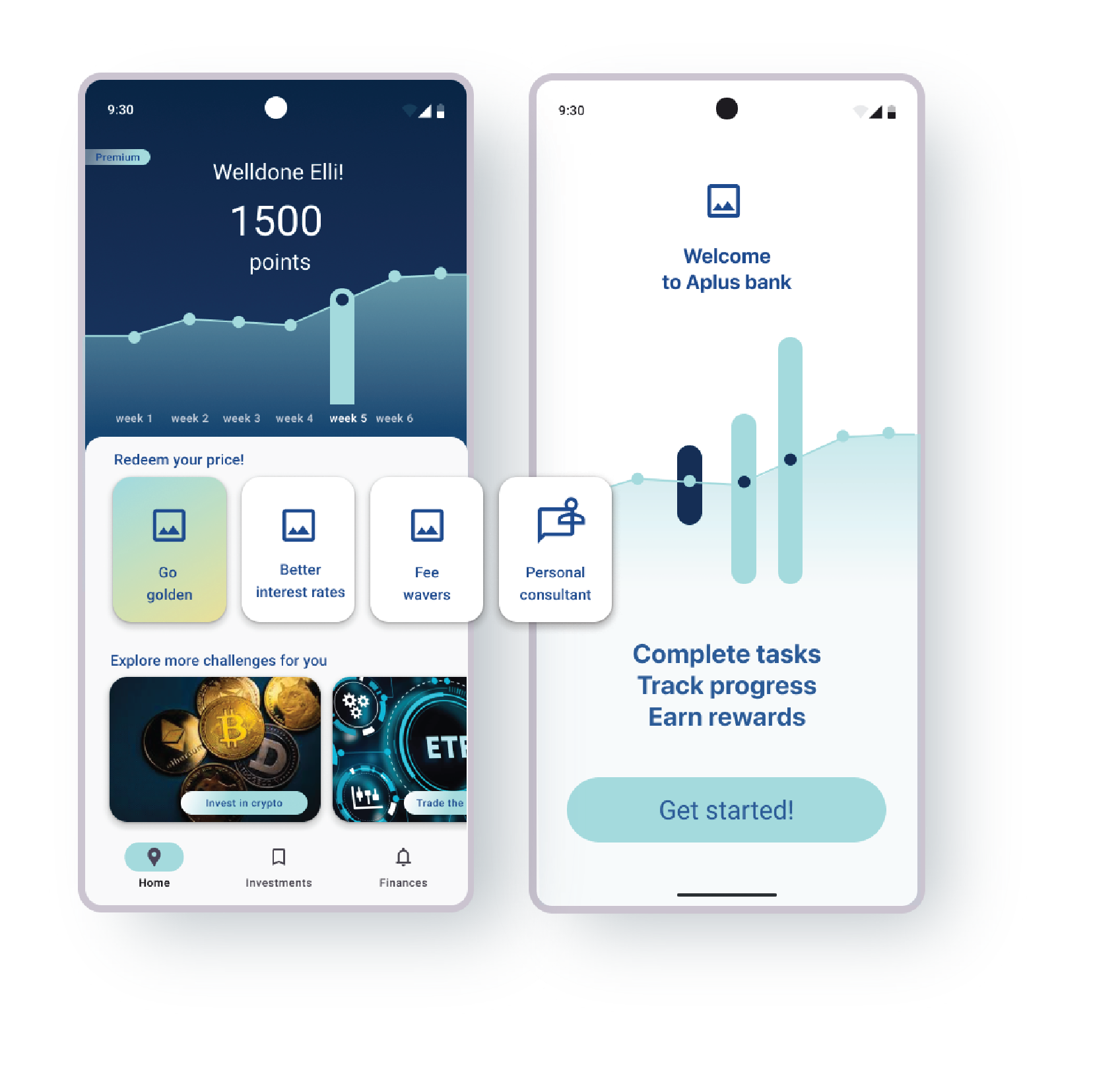
Aplus Bank is a conceptual Product Design case study exploring how digital banking could move beyond transactions to help people build healthier financial habits, stay motivated and feel more in control of their money.
I developed the concept end to end ,from research and product strategy to UX/UI and interaction design, exploring how AI, personalization and gamification could work together to create a banking experience that feels supportive rather than overwhelming.
The project became an opportunity to investigate a broader question: How can financial products encourage positive behavior without becoming manipulative, distracting or overly gamified?
Rethinking everyday banking through motivation, intelligence and play
ROLE
Senior Product Designer
SCOPE
Research · Product Strategy · UX/UI · Prototyping
FOCUS
Fintech · AI · Gamification · Behavioral Design
PROJECT TYPE
Independent Concept Case Study
THE OPPORTUNITY
THE DESIGN CHALLENGE
From managing money to building better financial habits
Most digital banking experiences are designed around transactions, balances and financial management. But knowing what is happening with your money doesn't necessarily make it easier to change your behaviour.
Aplus explored a different opportunity: what if a banking experience could help people turn financial intentions into small, achievable actions, making progress visible and creating motivation to continue?
The concept focused particularly on users who are price-sensitive and savings-driven, but may struggle to maintain financial goals over time. Rather than adding more information, the opportunity was to design an experience that could make saving feel more tangible, rewarding and achievable.
How might we transform everyday financial goals into motivating experiences that help people build better habits over time?
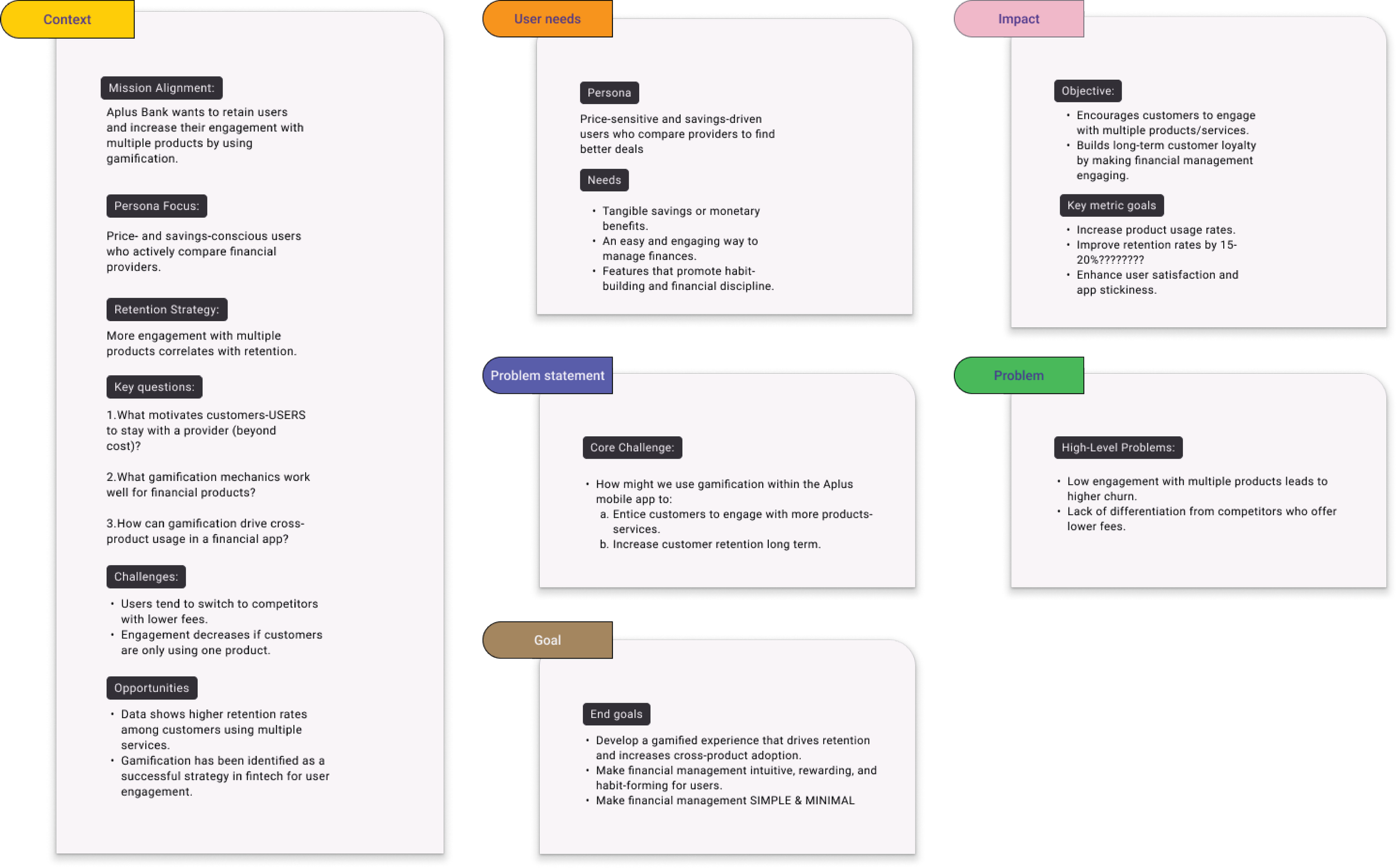
FRAMING THE PRODUCT OPPORTUNITY
Connecting user needs, business goals and measurable outcomes.
RESEARCH & MARKET LANDSCAPE
Understanding what motivates financial behavior
To define the right engagement strategy, I explored what motivates savings-conscious users to build and maintain financial habits, alongside how existing financial products use behavioral design and gamification to encourage participation.
The research combined primary and secondary methods, connecting user needs and behavioral patterns with a broader analysis of fintech products, engagement mechanics and habit-forming experiences.
RESEARCH APPROACH
Connecting user behavior with patterns from the market
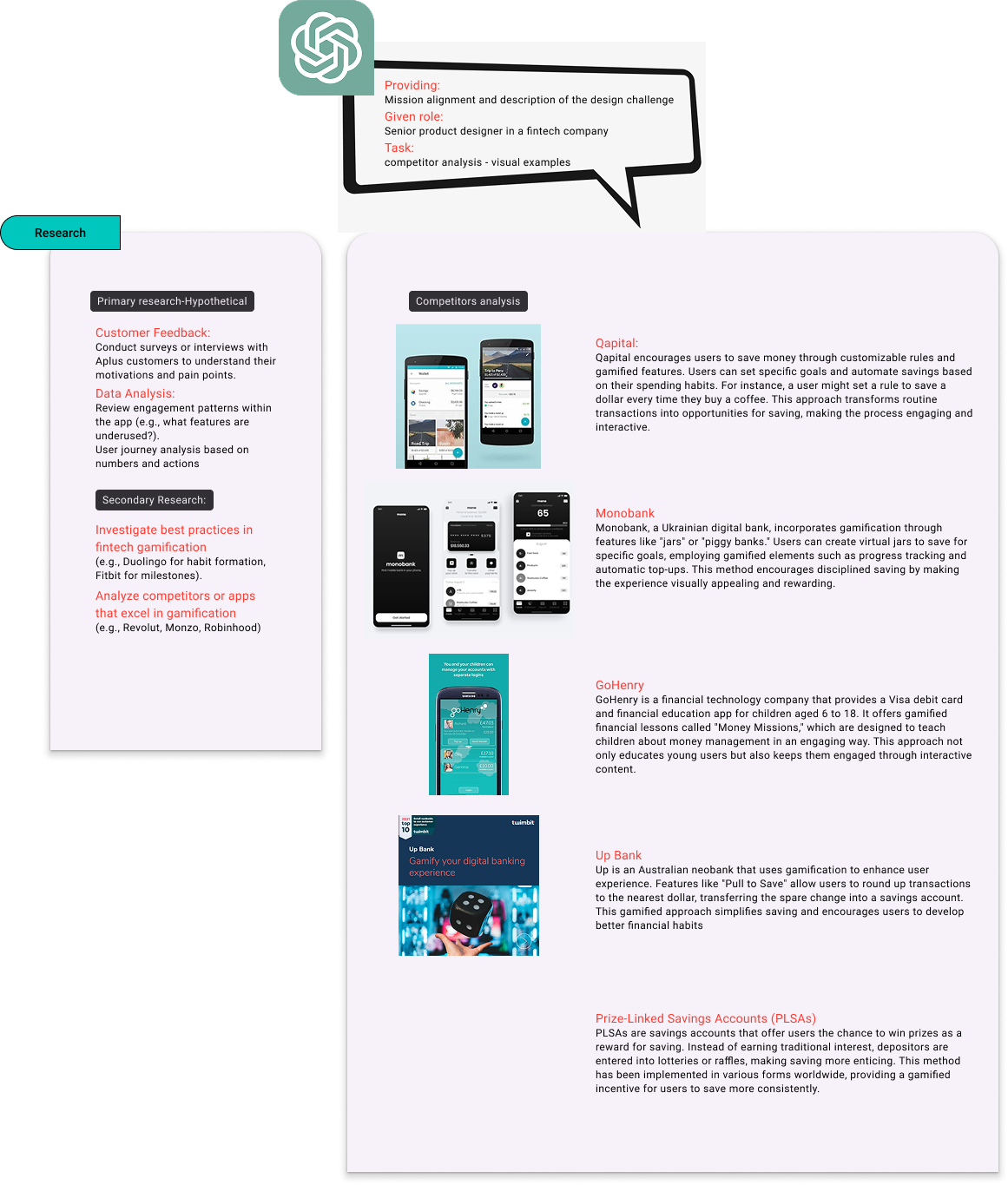
Primary research focused on understanding user motivations, pain points and patterns of engagement, while secondary research explored behavioral and gamification principles across financial and non-financial products.
I then analysed products including Qapital, Monobank, GoHenry and Up Bank, looking beyond individual features to understand the mechanisms behind them — from automated savings and progress tracking to challenges, rewards and habit-building interactions
.
WHAT THE RESEARCH REVEALEDGamification works best when it makes progress meaningful
The strongest patterns were not simply about points, badges or rewards. Successful experiences made progress visible, goals achievable and positive behaviors easier to repeat.
This shifted the direction of the concept away from “gamifying banking” toward designing a system that could support motivation and reinforce meaningful financial habits.
Don't reward people for using the app. Reward progress toward meaningful financial behavior.
DEFINING THE PRODUCT STRATEGY
Turning motivation into a connected engagement system
The research suggested that engagement shouldn't depend on isolated rewards or one-off interactions. The opportunity was to create a connected system where everyday financial actions contribute to visible progress over time.
I translated these insights into a product strategy built around goals, tasks, streaks and rewards, different mechanisms working together to encourage consistency while giving users a clear sense of progress and achievement.
The intention was not to make banking feel like a game, but to use selected principles from behavioral design to make positive financial actions easier to start, understand and maintain.
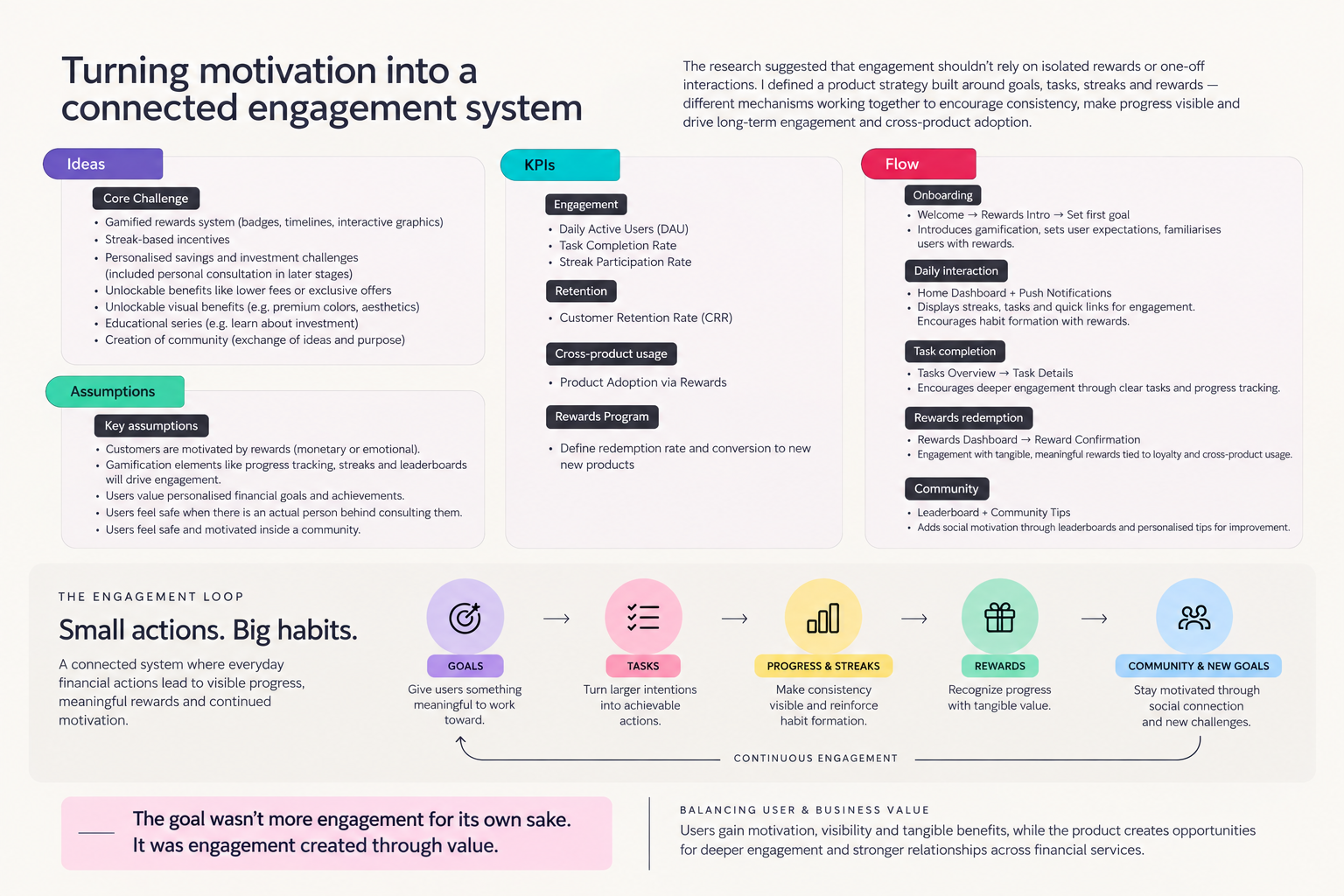
BALANCING USER & BUSINESS VALUEThe system was designed around an exchange of value: users gain motivation, visibility and tangible benefits, while the product creates opportunities for deeper engagement and stronger relationships across financial services.
This balance became an important design principle throughout the concept, engagement should emerge from useful behavior and genuine progress, rather than from mechanics designed purely to increase time spent in the app
The goal wasn't more engagement for its own sake.
It was engagement created through value.
DESIGNING THE CORE EXPERIENCE
Turning the strategy into everyday interactions
I translated the engagement strategy into a connected experience built around tasks, progress, challenges and rewards, integrating these mechanics into everyday banking rather than treating them as a separate gamification layer.
The experience was designed to make progress visible, next steps clear and rewards meaningful, while keeping the underlying financial activity at the centre.
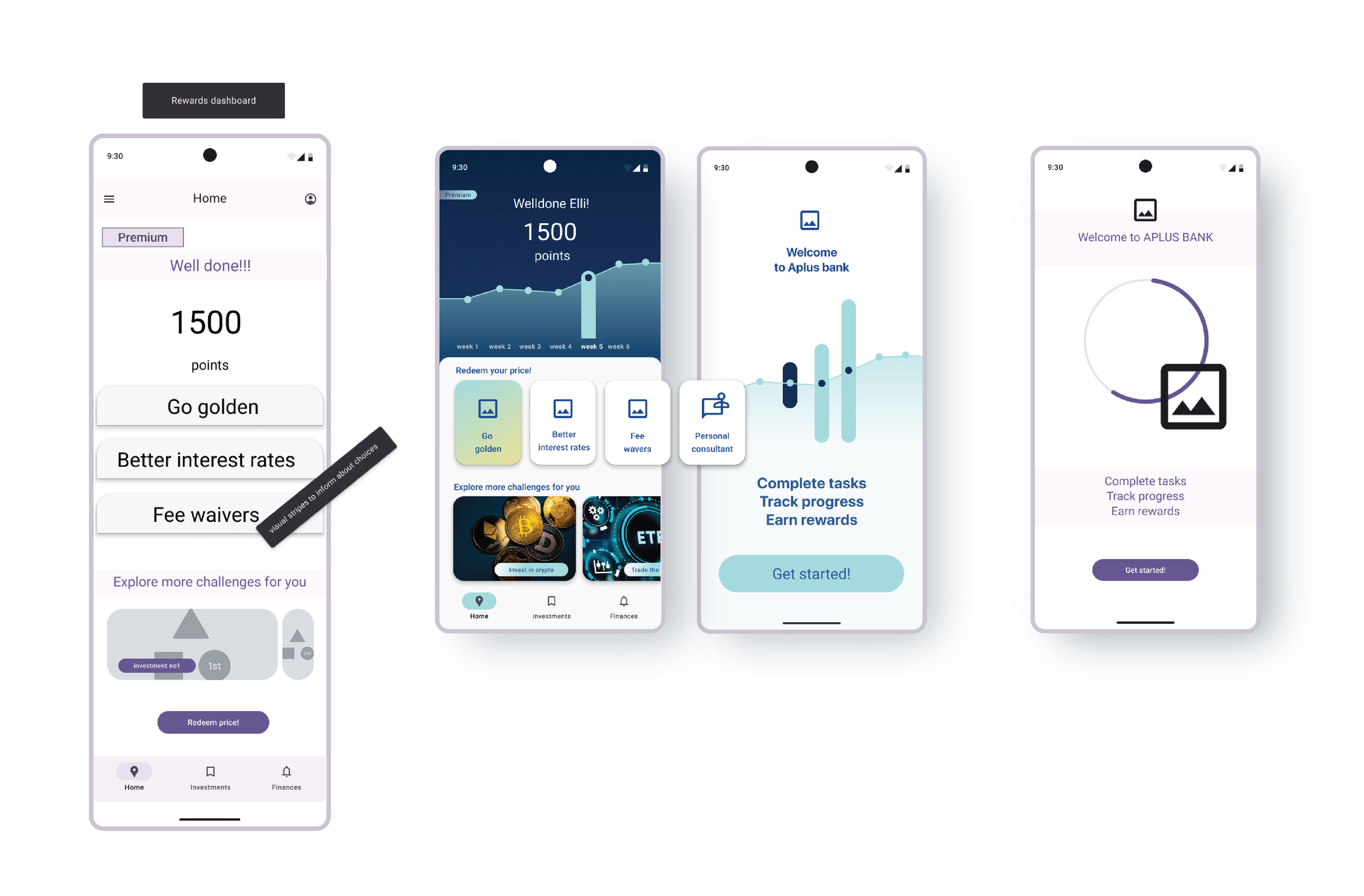
FROM STRUCTURE TO EXPERIENCE
Testing the system before refining the interface
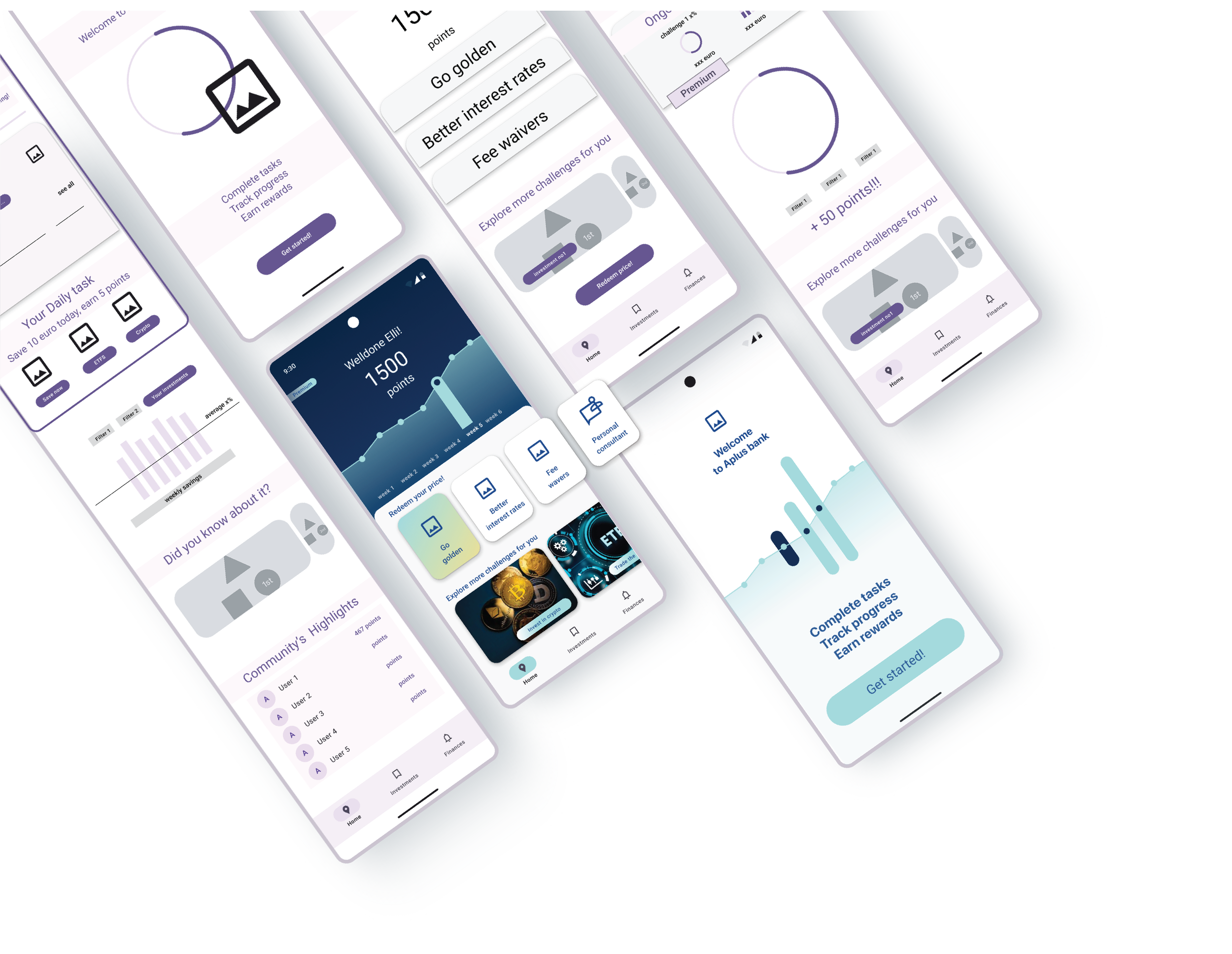
Early explorations focused on the relationship between onboarding, daily activity, challenges and rewards, helping define the hierarchy and flow before moving into visual refinement.
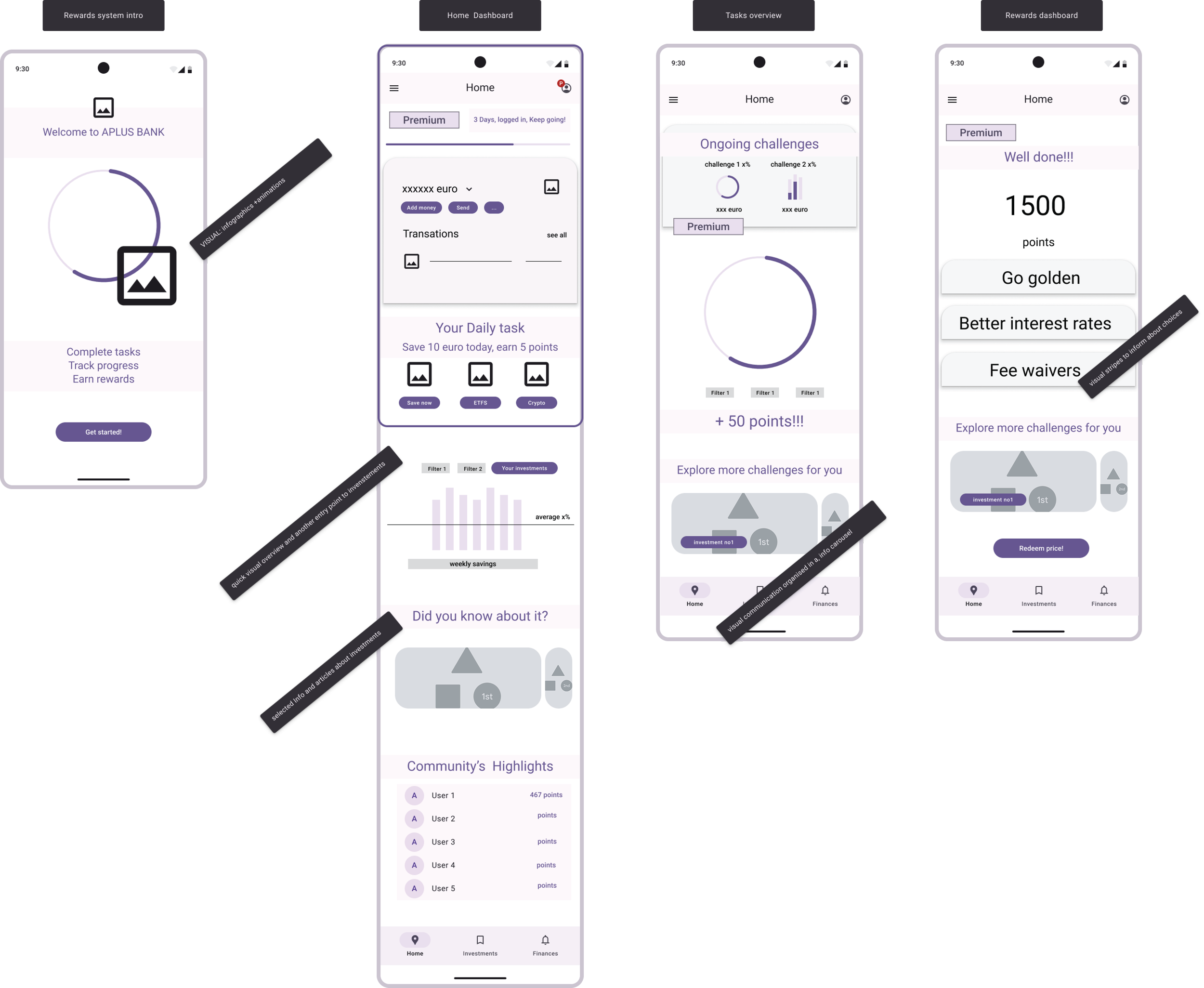
REFINING THE EXPERIENCE
Making progress feel tangible
The final direction gave greater emphasis to progress, achievement and reward visibility, using a clearer hierarchy and more expressive visual feedback to make the experience feel motivating without losing the credibility expected from a financial product.