Turning logistics complexity into scalable digital systems
B2B Logistics · Product Strategy · Systems Thinking · Design Management
At Warehousing1, I led end-to-end Product Design and design strategy across a complex logistics ecosystem, working across customer and partner platforms as well as the development of the new WH1+ integrations product.
My role combined hands-on Product Design with design management and team leadership, translating complex operational workflows into digital experiences while establishing design processes, scalable systems and collaborative ways of working.
Working closely with Product, Engineering, business stakeholders and logistics partners, I connected user research, business needs and technical constraints to create shared direction across products and teams.
ROLE
Senior Product Designer
SCOPE
End-to-End Product Design · Strategy · Research · UX/UI · Design Management
LEADERSHIP
Team Management · Facilitation · Cross-Functional Alignment · Design Culture
FOCUS
B2B Platforms · Logistics · WH1+ · Design Systems
UNDERSTANDING THE LOGISTICS ECOSYSTEMDesigning across interconnected users, systems and operations
Warehousing1 connected businesses looking for logistics solutions with a network of warehousing and fulfillment partners. Designing for this ecosystem meant understanding very different users, workflows and operational realities , from customers searching for the right logistics setup to partners managing services, capacities and requests.
The challenge was to transform complex and often fragmented logistics processes into clear digital workflows, while creating experiences that could scale across different users, business needs and operational scenarios.
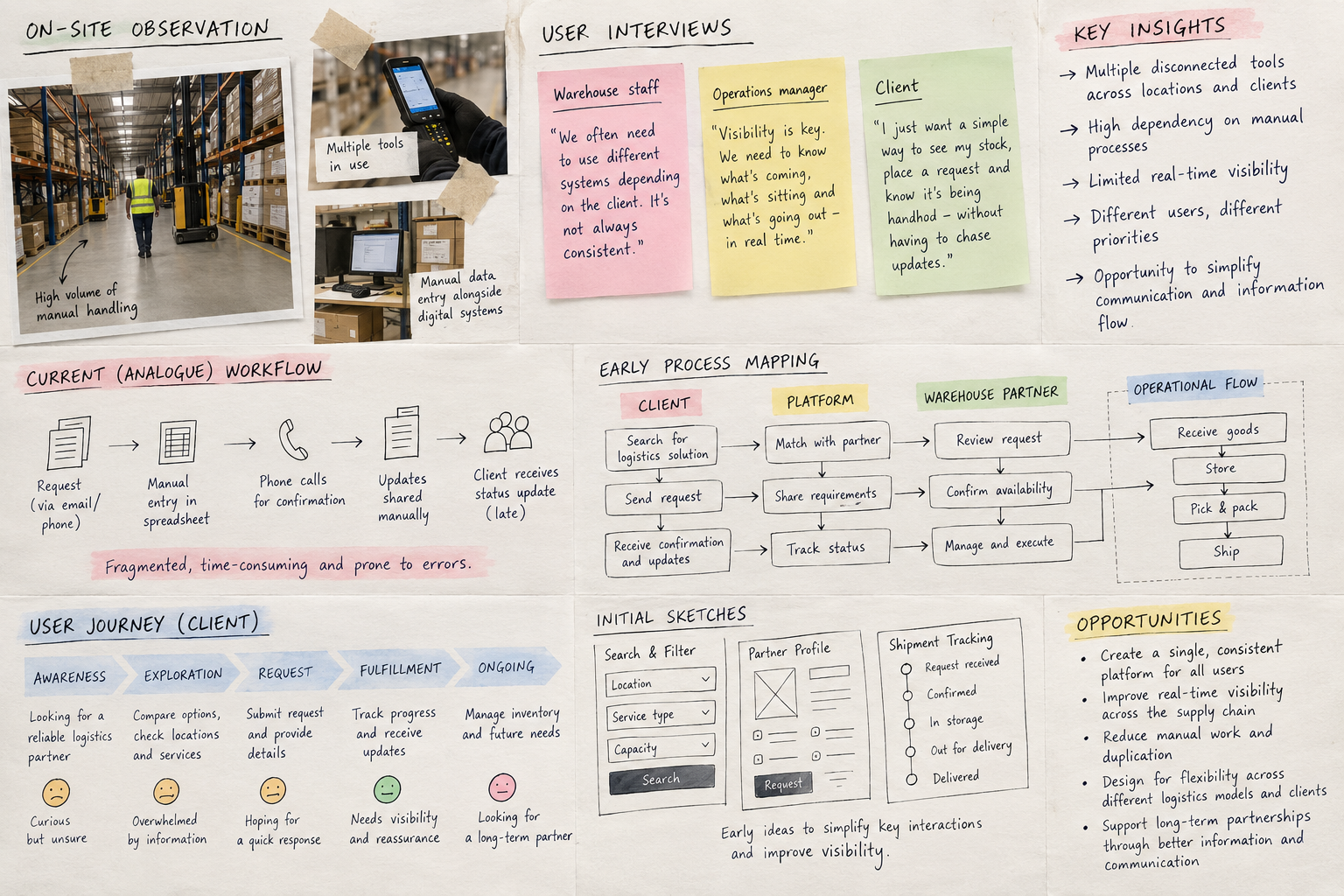
RESEARCH & DISCOVERY
From physical operations to digital workflows
To understand the reality behind the platform, I combined user interviews, stakeholder conversations and on-site observation, looking beyond the interface to understand how logistics work actually happened.
Observing warehouse operations helped uncover the relationship between physical processes, existing tools, manual workarounds and digital touchpoints. I mapped these workflows to identify friction, dependencies and opportunities for the product to better support real operational needs.
These insights became a foundation for product priorities, information architecture and design decisions, helping the team move from assumptions toward a shared understanding of the problem space.
DESIGNING ACROSS THE PRODUCT EXPERIENCE
From complex software to a coherent brand experience
My work at Warehousing1 extended across multiple touchpoints of the product , from complex desktop software and mobile experiences to the wider visual identity of the brand.
Rather than treating these as separate outputs, I approached them as parts of the same ecosystem, creating consistency across interactions, visual language and user experience while adapting the design to different contexts and needs.

Simplifying complex logistics workflows
The core platform needed to make information-heavy logistics processes easier to understand and manage.
I worked across dashboards, workflows and operational interfaces, using clear hierarchy, progressive disclosure and reusable interaction patterns to reduce complexity and create a more scalable product experience.
SOFTWARE

MOBILE EXPERIENCE
Bringing essential workflows into a more immediate context
The mobile experience required a different level of focus. Instead of transferring desktop interfaces directly to smaller screens, I prioritised the information and actions users needed most on the go, adapting workflows around context, speed and clarity.
This helped extend the product ecosystem beyond the desktop while maintaining a consistent experience across devices.
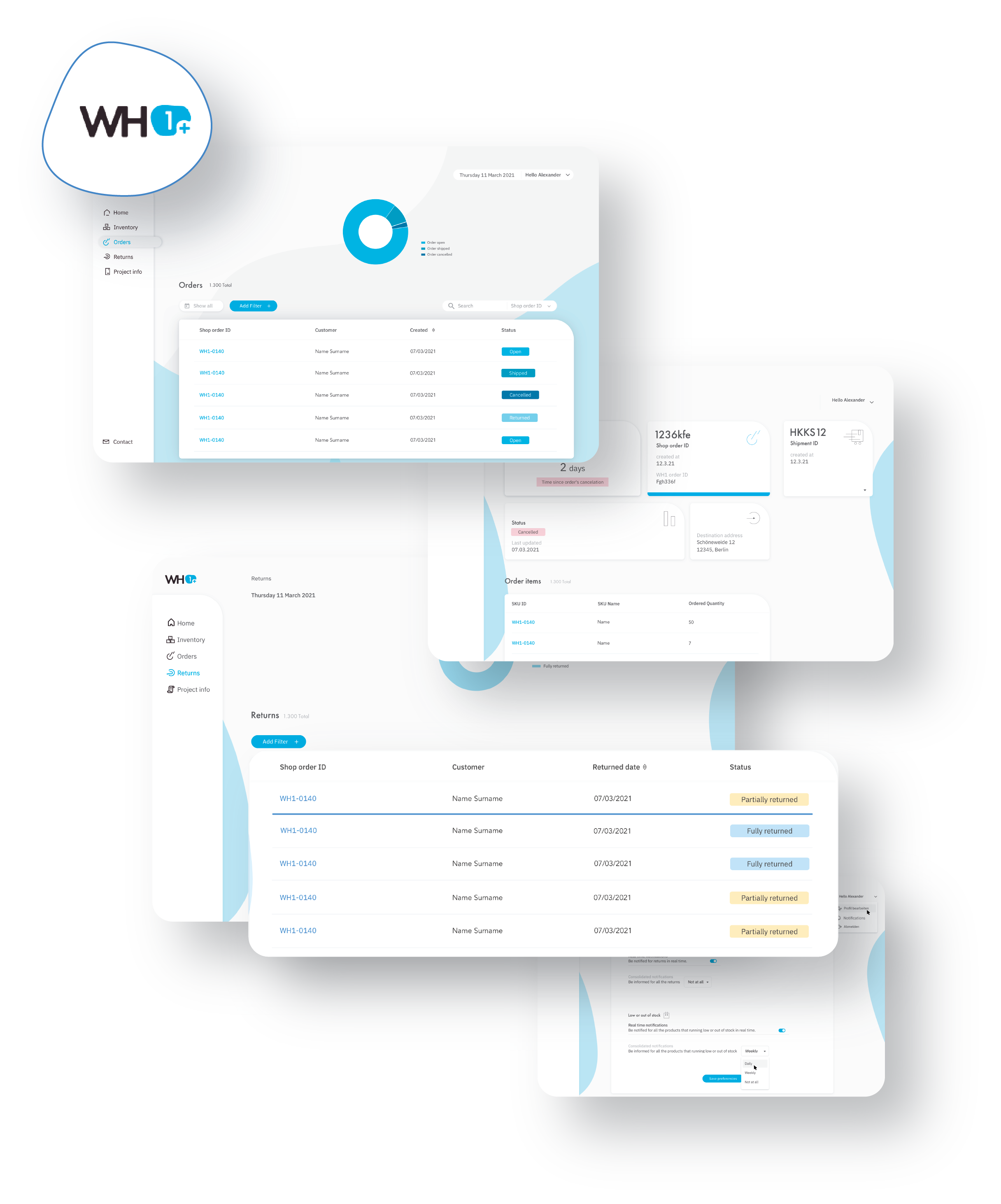
INTEGRATION PLATFORM
Building a connected logistics experience from the ground up
As Warehousing1 expanded its digital ecosystem, I worked on the integration platform from its early stages, helping translate complex technical and operational requirements into a product experience that users could understand and manage.
The challenge was to make integrations feel less technical and fragmented, creating clear structures, modular patterns and scalable workflows that could support different logistics services and systems as the platform evolved.
Working closely with Product and Engineering, I helped shape both the product logic and user experience, balancing technical feasibility with usability and long-term scalability.
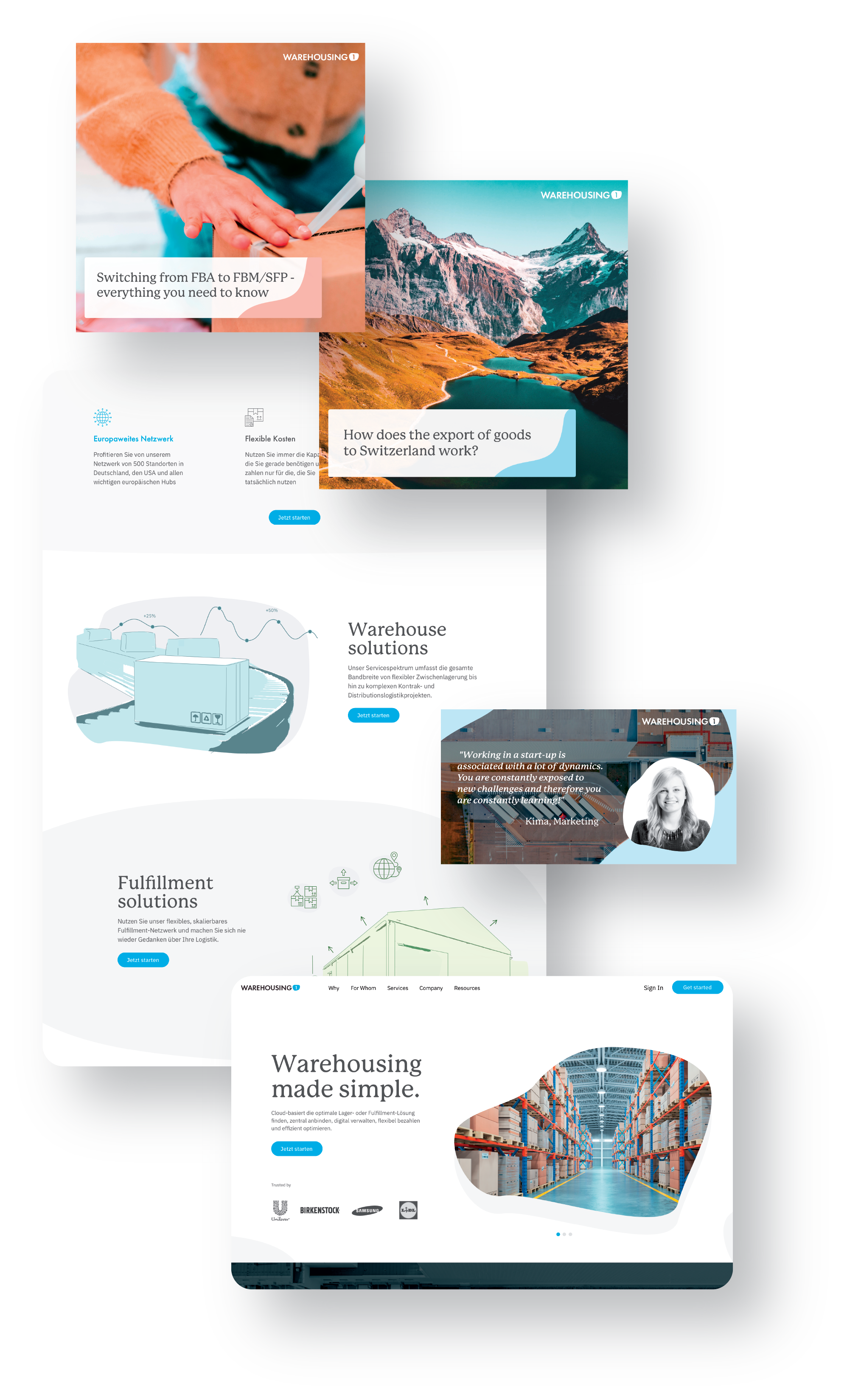
Extending design beyond the product
Together, these experiences created a more coherent design language across software, mobile, integrations and brand, connecting different parts of the Warehousing1 ecosystem through a shared approach to usability, consistency and scalability.
BRANDING & VISUAL IDENTITY
DESIGN SYSTEMS & SCALABILITY
Creating consistency without slowing the product down
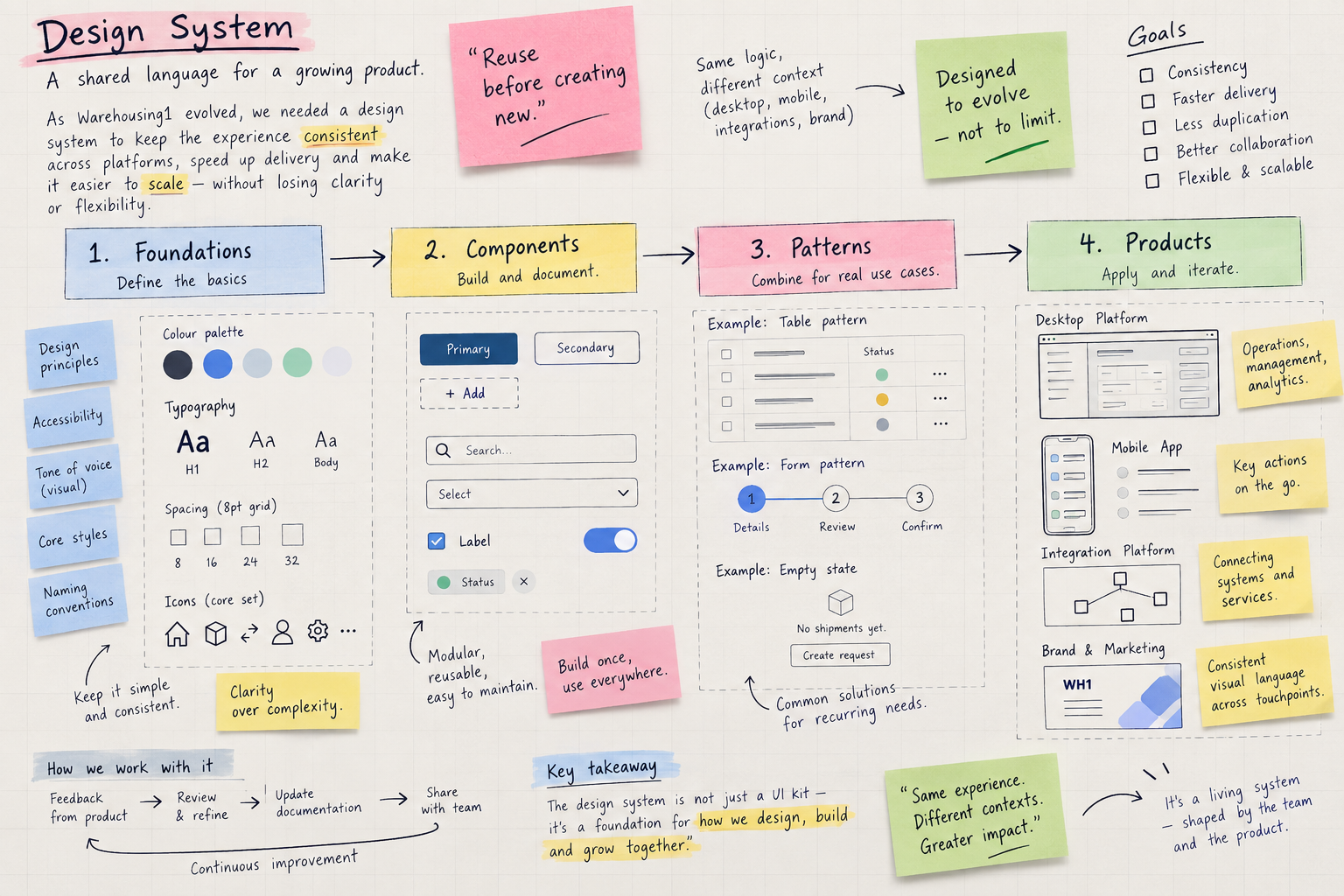
As the product ecosystem expanded, maintaining consistency across different platforms became increasingly important. I worked on developing a modular design system and shared interaction patterns that could support desktop, mobile and integration experiences while continuing to evolve with the product.
The system was not only about UI consistency. It created a shared language between Design and Engineering, reduced duplicated work and helped teams make faster, more coherent decisions as new requirements emerged.
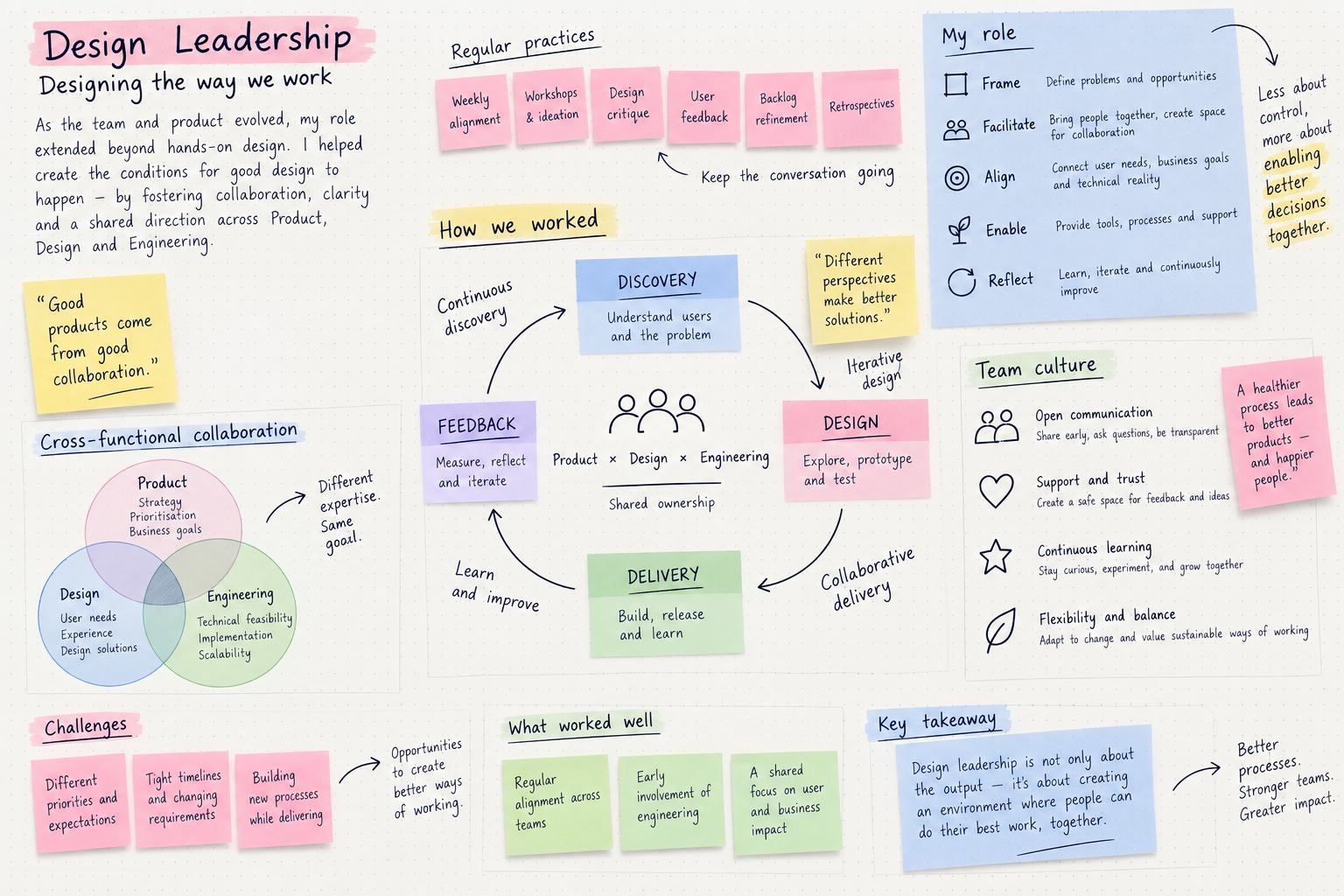
DESIGN MANAGEMENT & TEAM CULTURE
Designing the way we worked, not only what we built
As my role evolved, I became increasingly involved in how the team worked together. Alongside hands-on Product Design, I helped establish collaborative processes, facilitate alignment and create a working culture where Product, Design and Engineering could solve problems together.
I introduced and facilitated workshops, regular alignment, retrospectives and iterative design practices, helping surface blockers early, clarify responsibilities and create stronger shared ownership across the team.
For me, design leadership in this context was less about controlling the design output and more about creating the conditions for the team to make better decisions together.